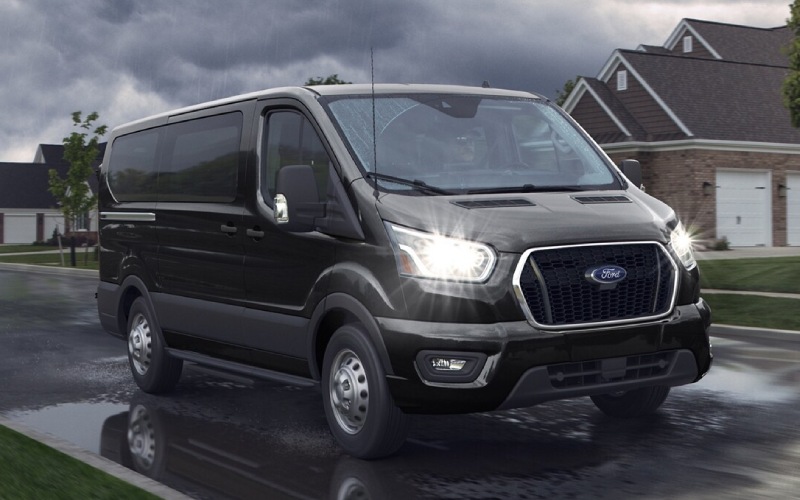
*Not actual model
Quality Auto Mall – Which 2026 Ford Transit Engine Is Best for Business Deliveries around Kearny, NJ?
Choosing the right powertrain is one of the most important decisions you’ll make when ordering a Transit for delivery duty. The lineup offers two proven V-6 engines—a naturally aspirated 3.5-liter and an EcoBoost 3.5-liter—each paired with a 10-speed automatic and configured for either rear-wheel drive or available all-wheel drive. Your ideal choice depends on route type, load patterns, and how often you need brisk acceleration in traffic or on grades.
The naturally aspirated 3.5-liter V-6 produces 275 horsepower and 262 lb-ft of torque. It’s a smooth, predictable partner for urban routes with frequent stops, lighter payloads, and lots of curbside parking. If your daily rhythm is short hops and steady mid-speed cruising, this engine’s even power delivery can keep drivers comfortable without over-spec’ing your build. On the other hand, the 3.5-liter EcoBoost V-6—rated at 310 horsepower and 400 lb-ft—adds serious low-end punch that’s noticeable when pulling away from a light with a full load, merging onto busy highways, or tackling hilly terrain. Paired with the 10-speed automatic, the EcoBoost’s broader torque curve helps the van stay responsive without constant downshifts, a plus for driver confidence and schedule predictability.
Consider the full context of your routes. If you frequently operate in dense traffic with tight delivery windows, the quick response of the EcoBoost V-6 can trim seconds at every stop and reduce stress when small gaps appear. If your business carries lighter parcels and runs mainly on flat, familiar streets, the standard V-6 remains an excellent fit—especially when you value consistent, calm drivability. Driveline choice matters, too: available all-wheel drive enhances traction in rain, snow, and on gravel or uneven service roads, making it a smart addition for year-round reliability. Rear-wheel drive continues to be a balanced, capable option for predictable surfaces and certain higher payload builds.
Technology also plays a role in driver satisfaction and efficiency. Regardless of engine, the Transit offers standard safety features like Automated Emergency Braking, Lane-Keeping Assist, and Lane-Departure Warning. For busier routes with frequent lane changes, available Blind-Spot Monitoring helps keep drivers aware of surrounding traffic, while an available 360-Degree Camera system takes the edge off tight alleyways and loading zones. Inside, stepping up to the available 12.0-inch SYNC 4 touchscreen adds integrated navigation and wireless Apple CarPlay and Android Auto—ideal for real-time rerouting, hands-free updates, and streamlined workflows. Less time fumbling with devices equals more time hitting your stops on schedule.
Think beyond day one. If your business is growing into heavier loads or longer routes, the EcoBoost V-6 gives you headroom without reinventing your build later. If your mix is stable and focused on short-haul drops, the naturally aspirated V-6 remains a smart, cost-conscious foundation. In both cases, the 10-speed automatic’s close ratios and smooth calibration help keep the van composed, while available all-wheel drive adds resilience when the weather turns.
Quality Auto Mall helps local owners tailor their configuration to everyday realities—from engine selection and driveline to roof height, wheelbase, and the right driver-assist features for your territory. If you operate across mixed terrain or encounter winter weather, we’ll walk you through how available AWD complements your engine choice and what that means for your typical payloads. Our commercial team will also coordinate with upfit partners so your Transit arrives ready to roll, with shelves, partitions, and floor protection aligned to your route model.
Frequently Asked Questions:
Which engine is better for frequent highway merges and uphill routes?
The 3.5-liter EcoBoost V-6, with 310 hp and 400 lb-ft of torque, offers stronger low- and mid-range response that helps when accelerating onto busy highways or climbing grades with payload.
Is all-wheel drive worth it for delivery vans?
If you face snow, rain, or gravel and uneven service roads, available AWD adds traction and consistency. For predictable, dry routes, rear-wheel drive remains a well-balanced choice.
Will the larger touchscreen help drivers stay on schedule?
Yes. The available 12.0-inch SYNC 4 system with integrated navigation plus wireless Apple CarPlay and Android Auto streamlines directions, voice commands, and app access, helping drivers adapt to traffic and keep moving.
For route planning, driver training, and build selection, our team is serving Nutley, Kearny, and Bloomfield with personalized guidance. If you’d like a side-by-side comparison drive of both engines on your typical roads, we’ll arrange a realistic test loop and discuss how driver-assist and infotainment options can reduce fatigue and improve consistency across your fleet.
Request more 2026 Ford Transit information
Connect with us


