Quality Auto Mall – Is the 31-Gallon Fuel Tank on the 2026 Ford Transit Worth It in Newark, NJ?
Choosing the right fuel tank capacity can quietly transform your daily routine in and around Newark. For businesses and shuttle operators considering the 2026 Ford Transit®, the available 31-gallon Extended Range Fuel Tank is a small spec choice that can yield big gains in uptime, flexibility, and scheduling. Our team at Quality Auto Mall works with Newark, Elizabeth, Jersey City, and Port Newark customers every day, and we see how fewer fuel stops translate into real efficiency on I-78, the New Jersey Turnpike, and during curbside pickups at Newark Liberty International Airport.
What the larger tank adds—and why it matters locally
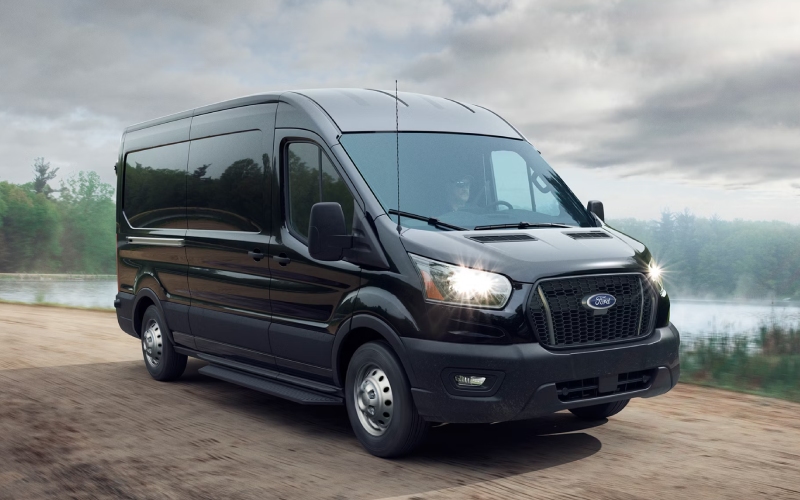
From the factory, the 2026 Ford Transit offers a 25-gallon tank, with an available 31-gallon Extended Range Fuel Tank. Both the 3.5L PFDi V6 and the 3.5L EcoBoost® V6 list the same fuel tank options, so you can prioritize range regardless of which powertrain you prefer. In everyday Newark use—think airport hotel loops, university shuttles, food service routes along Ferry Street, or contractor calls from Newark to Montclair and out to the Meadowlands—six extra gallons can cut a stop or two per day, especially when your schedule bunches up during rush hour.
Anyone who has tried to refuel near EWR during peak flight windows knows it can be a time sink. A larger tank lets you top off at off-peak times or closer to your home base. It also adds helpful buffer when traffic turns a 20-minute hop on Route 21 into a 55-minute crawl. That cushion keeps your team on time without scrambling for the nearest open pump.
Where extended range pays off on Newark-area routes
Consider a passenger shuttle that cycles between downtown Newark, the Prudential Center, and airport terminals all day. Or a delivery van that runs from Port Newark-Elizabeth Marine Terminal to warehouses in Kearny, then heads to customers across Jersey City and Bayonne before a final stop in Bloomfield. The mileage can look modest on paper, but idling, detours around construction, and tight drop-off windows add complexity. With the 31-gallon tank, drivers can move fueling to the beginning or end of a shift—one less operational variable to manage in the middle of the day.
For businesses that rotate drivers, consolidating refueling into predictable windows also reduces handoff friction. Your morning shift can focus on pickups and deliveries rather than rolling into the yard on fumes and leaving the next driver to sort it out.
Weight, payload, and practical tradeoffs
What about weight and payload? Fuel adds weight no matter the vehicle. As a general reference, gasoline is roughly 6 pounds per gallon, so the extra six gallons can add around 36 pounds when the tank is full. Against a listed maximum payload of up to 3,475 lbs. (when properly configured), that’s a modest tradeoff for the flexibility you gain. If your build consistently runs at the upper edge of payload—such as tools plus multiple crew members or heavy equipment—we can help you fine-tune your configuration and loading practices so you keep margin where you need it most.
Crucially, the Extended Range Fuel Tank does not change interior room. Seating layouts remain the same—whether you are building around two seats or up to 15 passengers—and your roof height and length choices do not shift because of the larger tank. It’s an under-skin decision with an above-the-line impact on operations.
Engine pairings and traction choices
You can select the larger tank alongside either engine—the 3.5L PFDi V6 or the 3.5L EcoBoost® V6—and across Rear-Wheel Drive or Available Intelligent All-Wheel Drive. Many Newark-area customers who face mixed weather and steep curbside approaches prefer Available Intelligent All-Wheel Drive for added confidence, and pairing it with the bigger tank keeps range consistent across seasons and routes. Availability can vary by body length, roof height, and seating, so our team will confirm the exact combinations for your use case.
Route design also matters. If you primarily operate inside Newark city limits, your drivers may make a lot of short trips with more idle time. If your vans shuttle daily to Hoboken, Manhattan connections, or out to New Brunswick and Morristown, your Transit will spend longer stretches at highway speeds. In both scenarios, the 31-gallon tank minimizes mid-shift interruptions—just in different ways.
Tech that supports longer stretches between fuel stops
Every 2026 Transit comes with standard SYNC® 4 and a 12″ Center Display, which makes it easy to find fuel stations, compare options, and reroute on the fly. The Ford Co-Pilot360® suite is now standard too, bringing features such as front and rear parking sensors and Pre-Collision Assist® with Automatic Emergency Braking to help drivers stay confident in busy corridors. The new 8″ instrument cluster includes a Tire Pressure Monitoring System (TPMS) to help maintain proper inflation—a small habit that supports efficiency and consistent handling when your schedule demands all-day driving.
Many Newark fleets also rely on the FordPass® App to view vehicle status, including fuel level, before a shift starts. With multi-van operations, that visibility helps dispatch assign a vehicle that’s already topped off to the longest route and leave shorter loops to a van that will refuel at day’s end.
Before you decide, it helps to step back and align the tank choice with your daily rhythms. Use the checklist below to frame the decision around real-world constraints rather than hypotheticals.
- Daily mileage and idle time: Estimate typical miles plus how long you idle during airport runs, warehouse queues, or construction staging.
- Refueling access: Map convenient fuel stops near your depot and along your usual corridors—Newark Liberty, I-78 interchanges, and Turnpike exits.
- Uptime goals: If your target is one van—one shift—one refuel, the 31-gallon tank helps lock in that cadence.
- Payload planning: Account for the extra fuel weight in your load calculations to preserve margin for people and gear.
- Upfit layout: Confirm shelves, partitions, and seating will keep weight balanced over the axles so your Transit tracks true all day.
- Futureproofing: If your routes are growing in radius or stops per shift, extended range today may save you operational changes tomorrow.
If you tow—Transit is rated to tow up to 4,500 lbs. when properly equipped—the larger tank also adds welcome margin. Trailers for mobile kitchens, landscaping equipment, or event gear can increase consumption over a shift. The extra six gallons helps keep your itinerary intact without reshuffling stops to accommodate a refuel.
Beyond fuel planning, consider complementary features that make long days easier on drivers and passengers. Available Close Assist helps the sliding door latch without slamming—useful for pre-dawn drop-offs in residential areas—and standard driver-assist features support confidence in tight parallel parking near Broad Street or Newark Penn Station. These details add up when your team is in and out of the van dozens of times per day.
Here’s how Newark-area operators we serve commonly configure their vans: airport hotels lean toward Passenger Van XL or XLT with Medium Roof, Long length, and the 31-gallon tank to minimize midday stops. Catering and retail delivery teams often choose Cargo Van builds with organization accessories, Available Intelligent All-Wheel Drive, and the larger tank to keep multi-borough routes predictable even if the Holland Tunnel or Pulaski Skyway slows to a crawl.
If you are unsure, we will sit down with your route map, passenger or payload needs, and upfit plans to model how the Extended Range Fuel Tank affects your schedule. Then we will help you test drive a 2026 Transit and confirm visibility, maneuverability, and comfort for your team’s daily reality in Newark.
Frequently Asked Questions:
Is the 31-gallon tank available on both Passenger Van XL and XLT?
Yes, the 2026 Transit Passenger Van lineup lists a standard 25-gallon tank with a 31-gallon Extended Range Fuel Tank available on many configurations. We will verify availability for your preferred roof height, length, and seating layout before you place an order.
Does the larger tank change interior space or seating?
No. The Extended Range Fuel Tank does not alter cabin dimensions, seating capacity, or your chosen roof height and length. It’s an underbody specification, so interior space and seat configurations remain the same—including options for up to 15 passengers.
Will the extra fuel weight reduce my payload?
Carrying more fuel uses a small portion of your available payload—roughly 6 pounds per gallon—so a full 31-gallon fill weighs a bit more than a full 25-gallon fill. Given the Transit’s robust payload ratings when properly configured, most operators find the tradeoff minimal compared with the operational benefits of fewer stops.
Can I monitor fuel level remotely?
Yes. With the FordPass® App, you can view vehicle status such as fuel level on supported vehicles, which helps dispatch match vans to routes and plan refueling outside of peak hours.
Does engine choice affect the fuel tank option?
Both the 3.5L PFDi V6 and the 3.5L EcoBoost® V6 list a standard 25-gallon tank with an available 31-gallon option. We will confirm compatibility across your selected drivetrain—Rear-Wheel Drive or Available Intelligent All-Wheel Drive—and body configuration.
Set up your Newark-spec Transit with our team
Whether you run a hotel shuttle by Newark Liberty, a nonprofit transport service, or a contractor fleet covering Essex and Hudson counties, the 31-gallon Extended Range Fuel Tank can simplify your day by reducing variables you have to manage. Visit or contact our team at Quality Auto Mall in Rutherford—just minutes from downtown Newark—to build the 2026 Ford Transit that fits your routes, passengers, and loading needs. We will help you select the right engine, confirm tank availability for your configuration, and get you on the road with a setup tailored to how you actually work.
Request more 2026 Ford Transit information
Connect with us


