
Quality Auto Mall – 2026 Ford Explorer vs 2026 Honda Pilot – Which SUV Has the Stronger Everyday Performance for Kearny, NJ Drivers?
What shoppers mean by “everyday performance”
Ask five Kearny drivers what “everyday performance” means and you’ll get five good answers: brisk highway merges, confident passing on Route 1&9, smooth stop-and-go near 15W, and the ease of settling into a predictable rhythm when traffic ebbs and flows. In that context, the 2026 Ford Explorer and 2026 Honda Pilot are both well-built, family-ready SUVs. But their hardware and tuning take different routes to the same destination—and those differences matter on real roads.
We’ll unpack the power, driveline behavior, towing confidence, and driver-assistance tech that shape how relaxed or energized you feel after a long day behind the wheel. And because the local loop includes the Pulaski Skyway, the Turnpike, and riverside arterials, this guide keeps the lens squarely on the roads you actually drive.
Power that helps, not just headlines
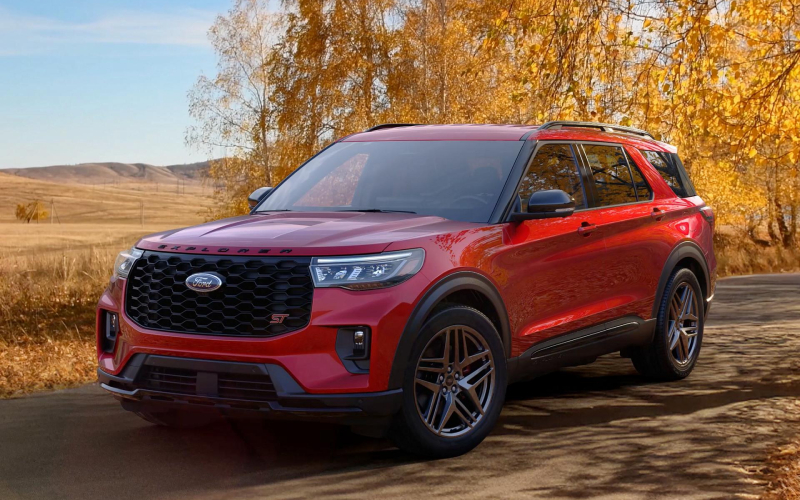
The Explorer embraces turbocharged flexibility. Its 2.3L EcoBoost® I-4 and 10-speed automatic wake up cleanly when you need a gap and fade into the background when you don’t. If your drive calls for more muscle—frequent on-ramp sprints, confident two-lane passes, or uphill merges with a full cabin—the available 3.0L EcoBoost® V6 provides a strong, sustained surge up to 400 horsepower in the ST. That extra headroom shows up as shorter merge windows and fewer white-knuckle moments.
Pilot’s 285-hp V-6 is smooth and steady through a 10-speed automatic. It’s easy to live with and responds well in the midrange. Around Kearny, NJ, it’s a reassuring partner, especially if you prefer a naturally aspirated powerband. When you really need the punch, though, Explorer’s available twin-turbo torque comes on earlier and lasts longer, which is exactly what “everyday performance” feels like in your right foot.
Drivetrain dynamics you can feel
The Explorer’s standard rear-wheel-drive architecture builds confidence from the ground up. Weight shifts feel natural, steering inputs are crisp, and traction arrives without fuss when you dig into the throttle to join the flow on I-280 or the Turnpike. Available Intelligent 4WD layers in selectable drive modes for changing conditions, while the Tremor’s Torsen® limited-slip rear axle adds real, mechanical grip when a weekend plan includes gravel or rutted access roads.
Pilot’s available i-VTM4® all-wheel drive is clever and capable, using clutch packs to shuffle torque between the rear wheels. It shines on slick surfaces and adds precision to cornering. Both systems inspire trust; the Explorer simply feels more planted and rear-biased, which translates to calmer reactions and fewer corrections when traffic compresses unexpectedly.
Towing and real-world confidence
Both SUVs can be equipped to tow up to 5,000 pounds, a sweet spot for small campers, a lightweight boat, or a pair of jet skis bound for a weekend at the water. The Explorer’s steady RWD-based stance helps reduce the back-and-forth you can feel through the wheel with a loaded trailer, and Trailer Sway Control works quietly in the background. Pilot brings robust cooling and integrated hitch hardware on specific trims; it’s nicely sorted and easy to hook up.
In practice, towing confidence is about more than a rating—it’s about how relaxed you feel with crosswinds, lane changes, and the kind of uneven ramp angles you’ll encounter at launch points along the Passaic. Here, the Explorer again benefits from a rear-drive foundation and strong, low-end turbo torque that helps get things moving without strain.
Driver assistance that truly reduces effort
Modern driver-assist systems aim to cut the workload in traffic and long highway stints. The Explorer offers Co-Pilot360® Assist+ on many trims and adds available BlueCruise hands-free highway driving on compatible roads, assisting with steering, braking, and acceleration while you keep your eyes up and engaged. That’s a meaningful reduction in effort on the Turnpike during longer commutes or weekend getaways.
Honda Sensing® in the Pilot is comprehensive—Collision Mitigation Braking System™, Road Departure Mitigation, Adaptive Cruise Control with Low-Speed Follow, and more. On upper trims, the Multiview Camera System helps in crowded lots around shopping corridors. It’s an excellent suite. The Explorer’s available hands-free capability and surround-view camera coverage take one more step toward easing your mind and your shoulders when the day runs long.
Key everyday advantages at a glance
- Passing power: Explorer’s available twin-turbo V6 provides confident, sustained thrust for shorter merge windows and decisive passes.
- Composed handling: A standard rear-wheel-drive platform gives Explorer a natural, planted feel in quick maneuvers and lane changes.
- Reduced fatigue: Available BlueCruise assists on compatible highways, and available massaging front seats help you arrive less worn out.
Inside, both SUVs are family-ready, but Explorer layers in comforts you’ll appreciate at the end of a long day—available ventilated and massaging front seats, the Ford Digital Experience, and a 360-Degree Camera that makes parallel parking near local restaurants far less stressful. Pilot’s cabin is roomy and well organized, with clever touches like a stowable second-row center seat on select trims and available Bose audio. If your priorities skew toward calm, effortless commuting with a little extra performance in your back pocket, the Ford’s feature set points in your favor.
Frequently Asked Questions:
Does the Explorer’s available BlueCruise work on all roads?
No. BlueCruise is designed for compatible, pre-mapped highways. You must remain attentive and ready to take control at all times.
How do the SUVs compare for tight parking around town?
Explorer’s 360-Degree Camera on select trims provides excellent visibility when backing into street spots or navigating tight garages. Pilot offers a Multiview Camera System on upper trims that also simplifies low-speed maneuvers.
Which is better for towing small campers in the area?
Both are rated up to 5,000 pounds when properly equipped. Explorer’s RWD-based foundation and turbo torque help it feel especially composed when merging or changing lanes with a trailer attached.
If you’re weighing both models and want to feel these differences on your own routes, schedule time with Quality Auto Mall—serving Clifton, Nutley, and Kearny—for a back-to-back drive. A few miles on familiar roads will make the Explorer’s everyday advantages unmistakable.
Request more 2026 Ford Explorer information
Connect with us


